
The Email That Outraised Our Thanksgiving Appeal: A Donor Retention Lesson for Nonprofits
A while back, our digital fundraising team built a strategy around one quiet email: a first-anniversary note. It marked the day a donor had made their very first gift, with a nod to the song and the movie from that year and a reminder of the impact they had set in motion. Nothing was for sale. No campaign, no donation appeal, no ask of any kind.
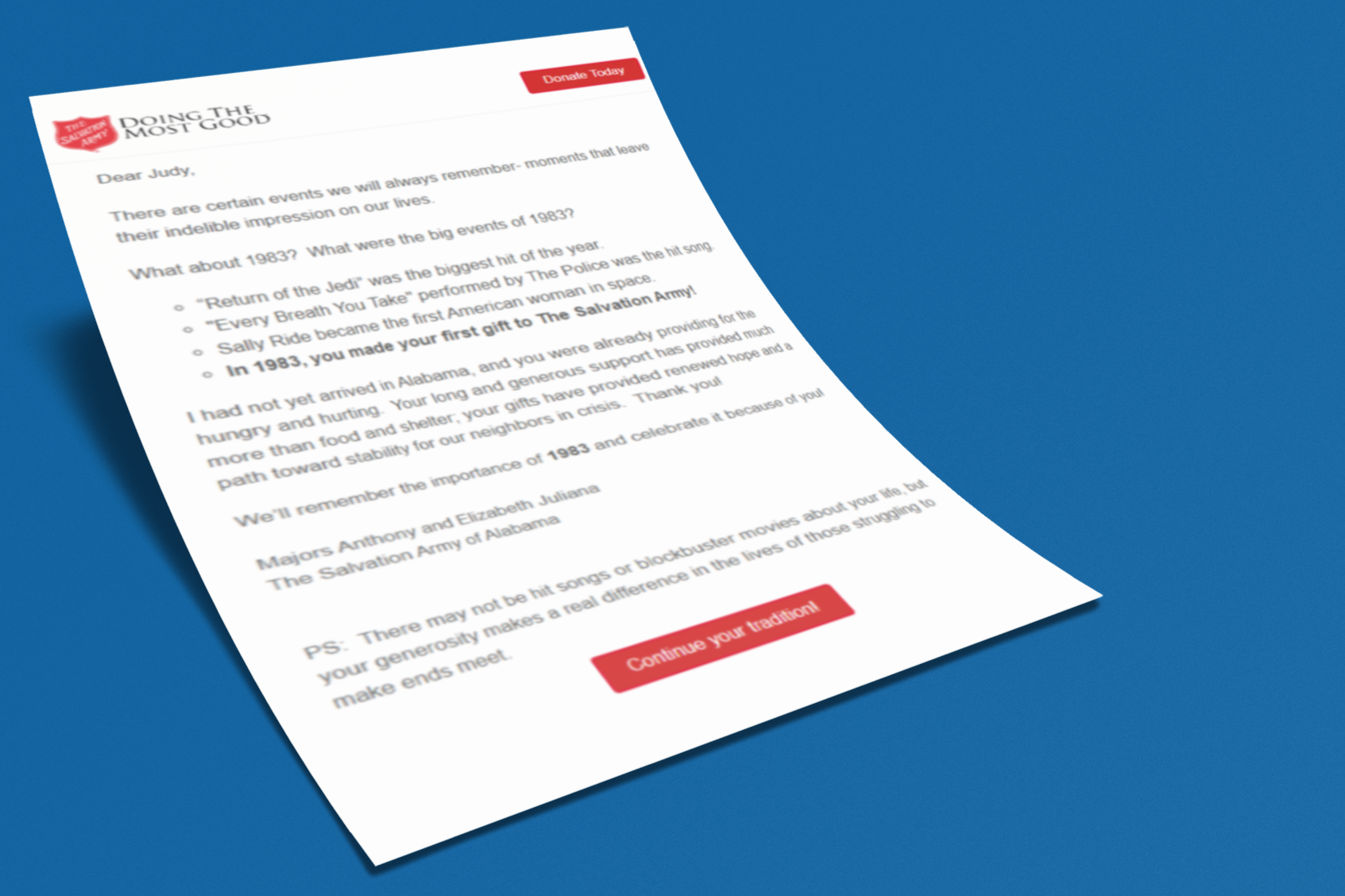
That email raised more money than our entire Thanksgiving appeal.
I have been doing this work for more than twenty years, and that result still catches me off guard.
Here is why it should matter to you. Across the sector, donor retention continues to slip. The Fundraising Effectiveness Project puts the overall donor retention rate in the mid-forties, and retention for first-time donors has fallen below 20%, in some cases closer to 17%. When more than half of the people who believed in your mission last year do not return the next year, much of your effort goes into simply replacing the supporters you lost, instead of building on them.
The good news is that the fix is not about spending more or asking more. It is about doing the unglamorous work most organizations skip: cleaning your donor data and finally paying attention to what it has been telling you all along. Then you change the order of things: engagement first, the ask last.
Here are five practices that do exactly that, and that any nonprofit can start this quarter.
Build a story engine, not only a campaign calendar
When a campaign ends, the content usually ends with it, and the organization goes quiet until it needs something again. We built our approach to prevent that. Our storytellers are out in the community all year, gathering raw, hyper-local stories. This year alone, we have filmed more than a hundred of them. Those stories get repurposed by our communication team and passed to the digital team, which turns them into donor engagement across every channel.
There is a quiet advantage in working this way. Stories gathered steadily, long before any campaign needs them, become a library you can draw from. When you already have authentic local moments on hand, you are never starting from zero. You have something real to say on the day a donor is actually paying attention, instead of a generic appeal.
Let recognition do the heavy lifting
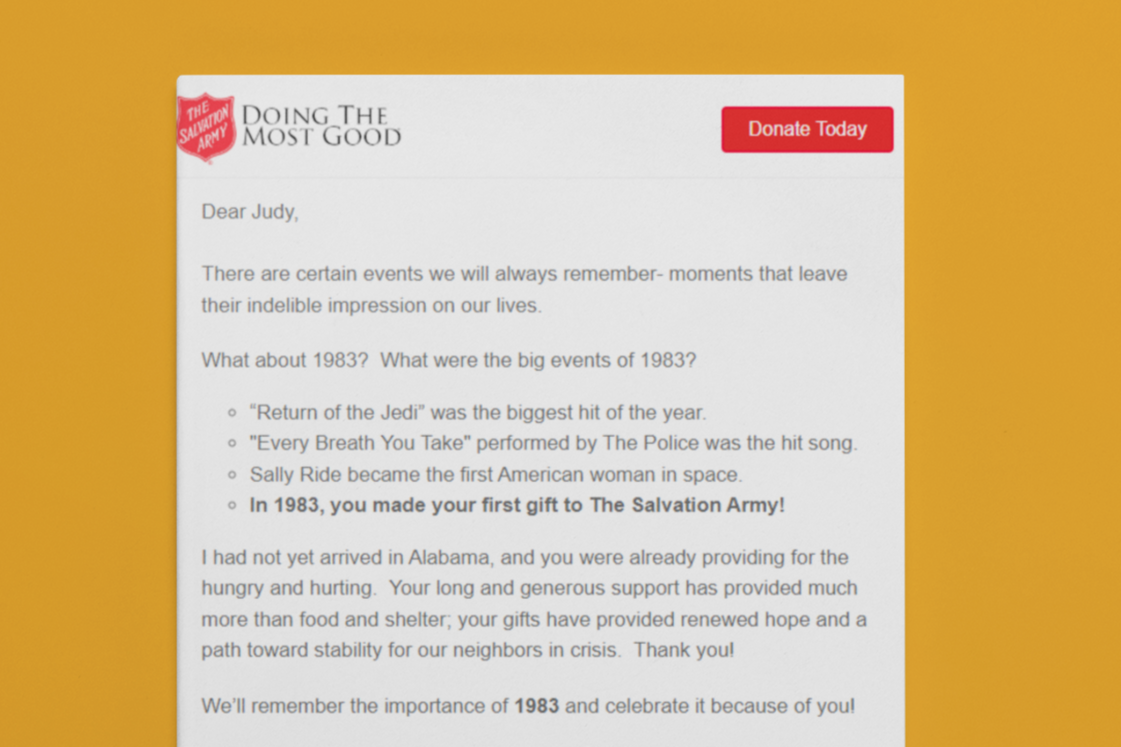
This is where our most surprising result came from. We marked the anniversary of every donor's very first gift. We pulled the song and the movie from that year, reminded the donor of the impact they had set in motion, and asked for nothing at all. That first-anniversary email raised more than our Thanksgiving appeal, with zero ask.
We run the same play on birthdays. We cleaned the database and tracked down the birthdays we were missing, one donor at a time, and sent a short video of our kids singing "Happy Birthday." The point is the same either way: recognition, with nothing attached.
Why does this work? A donor who only hears from you when you need money settles into a transaction, and transactions are easy to walk away from. A donor who hears from you when nothing is at stake becomes a partner, and partners stay. The thank-you is not a courtesy you tack on at the end. It is the relationship itself.
Show up in real time, and keep it local
The best donor moments are not scheduled. They happen in real time. When a hard freeze is on the way, when the local team wins a championship, when something painful happens in the community, that is the moment a quick, human message lands. It tells the donor there is a real person behind the logo who feels what they feel.
But the right moment is only half of it. The same message that feels personal because it arrived on time can still fall flat if it does not look like home.
Keep your visuals local. If you send a beautiful drone shot of a city your donor has never set foot in, you break the spell instantly. People give to their own streets and their own neighbors. A donor in Austin needs to see Austin, not stock footage of somewhere else.
Real-time and local are harder than scheduled and generic, but they are the difference between a message that gets ignored and one that gets a reply.
Send reports that say the right thing at the right time
A good impact report has to satisfy both sides of a donor's brain at once. The heart wants the story, the child's drawing, the familiar local face. The head wants the numbers, the transparency, the proof that the gift did what you promised. Most reports pick one side. The strong ones hold both.



But even a perfectly balanced report falls flat if it arrives at the wrong moment. Timing matters as much as content. We send our Christmas impact report in January, while the memories are still warm and inboxes are quiet. Wait until February, and the news already feels like old history, and the window closes.
We also segment reports by what each donor actually cares about, so a supporter who loves youth programs is not buried under housing and feeding numbers they never asked for. Say thank you in the language of the thing that moved them to give in the first place.
Turn offline generosity into digital relationships
Plenty of generous people give offline and never enter your digital world. So for one of our clients, we built a clever bridge. They run an in-kind giving program called Angel Tree, and we added a small QR code to the gift tags that simply said, "Follow your gift." With one scan, an anonymous in-kind donor stepped into the digital ecosystem we had built for them. In one division, that single sticker captured about 5,000 new email contacts.
From there, something quiet and remarkable unfolds. That December scan becomes a thank-you report in January. → The thank-you becomes a school update in February. → And by the time spring arrives, a stranger who once dropped off a gift is ready to send a child to summer camp.
We never pressured them once. We simply kept showing up with something worth opening, and the relationship built itself.
That is how you grow your base without the cost of chasing new donors or making a single hard ask.
Engagement first, the ask last
When we apply these practices consistently, the results follow. Among some of our partners in mission, at the area command level, we have seen revenue climb by more than 40% over two fiscal years, with email engagement and digital giving each up around 20%, and recurring donors growing alongside them.
The wider sector points in the same direction. Research from NextAfter found that consistent communication with online donors drives a roughly 41% increase in revenue, almost exactly what we have seen on the ground. And the latest benchmarks show that nonprofits are growing today by deepening relationships with their existing donors, not by chasing new ones. Better donor retention is not a nice-to-have. It is the growth strategy.
I recently shared these practices with a room full of nonprofit fundraisers at a communications conference in Texas, and I left them with one question. I will leave it with you, too. What would change if the next time your donors heard from you, you were not asking for anything at all?
If you are ready to turn your donor data into lasting relationships, that is exactly the work we do at G-Lab Group. Let's build it together.
